
Toronto & GTA Electrical Contractor
Motor Preventive Maintenance in Toronto, Richmond Hill, New Market & GTA
Industrial electrical work — installations, upgrades, troubleshooting, maintenance, and code-compliant solutions.
Licensed & Insured
Fast Response
Code-Compliant Work
INDUSTRIAL MOTOR PM & INSULATION TESTING
What We Do
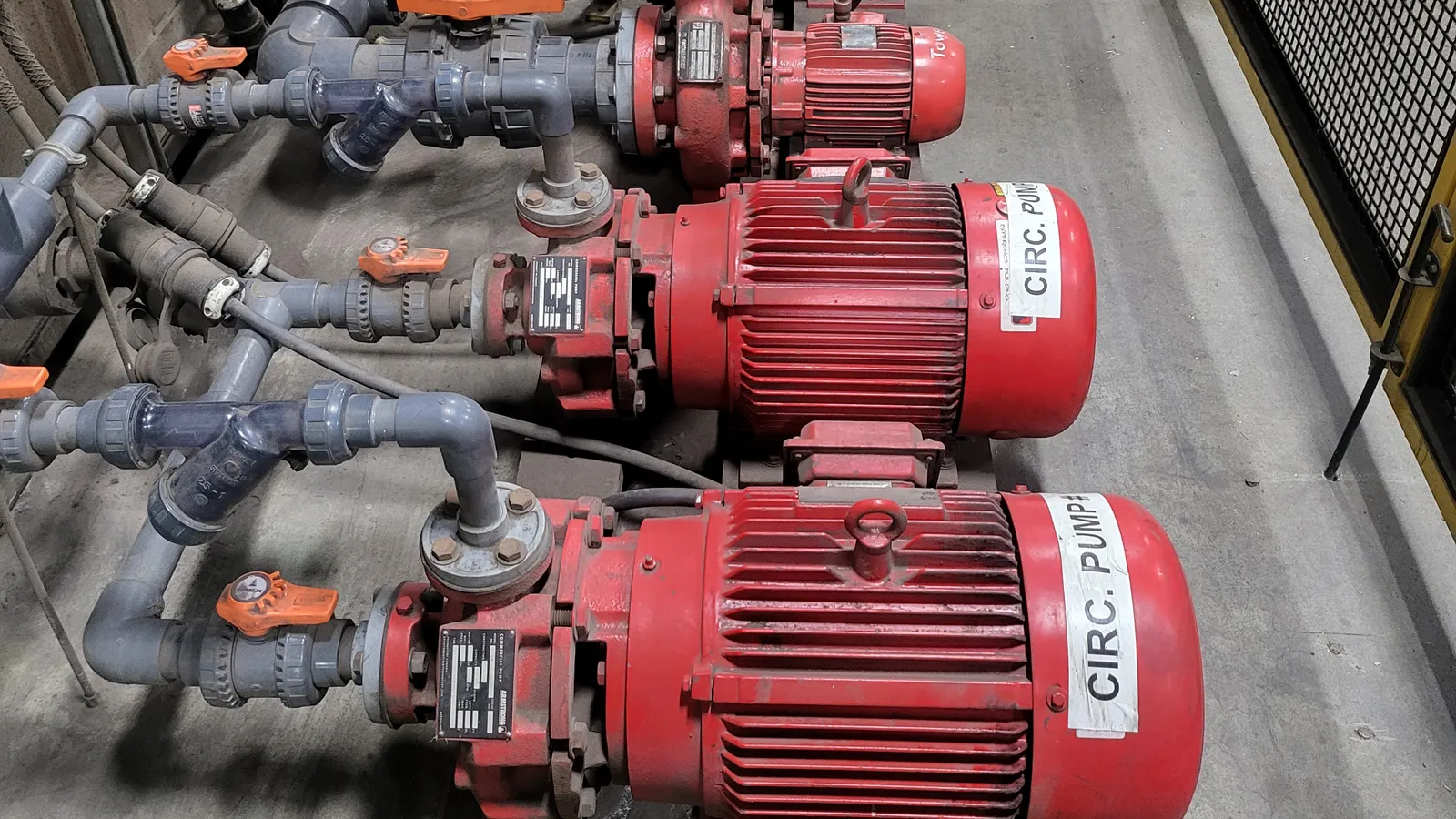
We provide motor preventive maintenance and insulation testing for industrial motors used on conveyors, pumps, fans, compressors, mixers, process machinery, and production equipment across Toronto and the GTA.
This service is built for facilities that want to understand motor condition before failure dictates the schedule. In industrial environments, motors operate under continuous electrical and mechanical stress: heat, vibration, contamination, moisture, load variation, and long duty cycles. These conditions slowly degrade motor windings, insulation systems, and internal components. The motor may continue to run, but reliability is already declining. Motor preventive maintenance and insulation testing is the structured way to identify that deterioration early, while there is still time to act in a controlled and planned manner.
According to Fluke, tracking insulation resistance values over time is one of the most effective ways to detect winding degradation and prevent unexpected motor failures. Industry standards such as NFPA 70B also emphasize the importance of preventive and predictive maintenance strategies based on equipment condition rather than fixed schedules.
Motor preventive maintenance and insulation testing combines routine inspection, electrical testing, and condition-based analysis. The goal is not just to measure a value, but to understand whether a motor is stable, degrading, or approaching a failure condition. This includes evaluating insulation resistance levels, comparing results with previous test data, and identifying patterns that indicate long-term deterioration.
In practical field applications, this service helps answer critical questions: Is the motor still electrically healthy? Are insulation values stable over time? Is there evidence of contamination, moisture ingress, or thermal stress? Should the motor remain in service, be monitored more frequently, or be scheduled for repair or replacement? These decisions are what separate controlled maintenance from reactive breakdown response.
One of the most important aspects of motor preventive maintenance and insulation testing is trending. A single insulation resistance reading has limited value on its own. What matters is how that value changes over time under comparable conditions. Fluke highlights that proper testing should consider voltage level, test duration, temperature, and historical baseline data to produce meaningful results rather than isolated measurements.
Where appropriate, testing can include insulation resistance (IR) and ratio-based methods such as polarization index (PI). According to Megger, PI testing evaluates insulation behavior over time and provides deeper insight into insulation condition, especially in industrial motors exposed to contamination or moisture. This aligns with best practices for condition-based maintenance in demanding environments.
In industrial settings, motor failures are rarely random. They are typically the result of gradual degradation that goes unnoticed until it reaches a critical point. Common issues identified during motor preventive maintenance include insulation breakdown, contamination inside windings, overheating damage, loose or degraded connections, bearing-related electrical effects, and motors operating outside their intended load profile. These issues may not cause immediate failure, but they significantly increase the risk of unplanned downtime.
Motor preventive maintenance and insulation testing is especially valuable for critical motors that support production, refrigeration systems, pumping operations, material handling, HVAC systems, and continuous process equipment. In these environments, a single motor failure can stop an entire process line or create a cascade of operational problems. Identifying risk early allows maintenance teams to plan interventions during scheduled downtime rather than reacting to emergency failures.
This service also supports better maintenance planning. Instead of replacing motors based on age or waiting for failure, facilities can make decisions based on actual condition data. This improves capital planning, reduces unnecessary replacements, and ensures that maintenance resources are focused where they are truly needed. It also helps maintenance teams justify decisions with measurable data rather than assumptions.
We provide motor preventive maintenance and insulation testing in Toronto, Mississauga, Vaughan, Markham, Brampton, and across the GTA. Our approach is based on real industrial conditions, not theoretical assumptions. We understand that motors operate as part of larger systems, and their condition directly impacts overall electrical reliability and operational continuity.
In addition to insulation testing, motor preventive maintenance may include visual inspection of connections and terminations, evaluation of operating conditions, identification of contamination risks, and coordination with other diagnostic methods. When required, this service can be combined with motor troubleshooting, electrical preventive maintenance, or infrared thermographic inspections to provide a more complete understanding of motor condition.
Industry guidance from manufacturers such as Schneider Electric confirms that proactive maintenance programs improve safety, reduce failure rates, and extend equipment life. This reflects the core purpose of motor preventive maintenance and insulation testing: reducing risk, improving reliability, and giving industrial clients control over their maintenance strategy.
Another important aspect of this service is risk reduction. Electrical motor failures can lead not only to downtime but also to secondary damage, safety risks, and increased repair costs. A motor that fails due to insulation breakdown can damage connected equipment, affect upstream protection systems, and create additional stress on the electrical network. Preventive maintenance helps reduce these risks by identifying weak points before they escalate.
This approach also improves operational predictability. Facilities that rely on condition-based maintenance can better plan shutdowns, allocate resources more effectively, and avoid unexpected interruptions. Over time, this leads to a more stable operating environment, improved equipment reliability, and lower overall maintenance costs.
Motor preventive maintenance and insulation testing is not about adding extra work. It is about replacing uncertainty with measurable data and informed decision-making. Instead of guessing when a motor might fail, maintenance teams gain visibility into actual equipment condition and can act accordingly.
The result is a structured and professional maintenance approach that protects critical motor assets, reduces downtime risk, and supports continuous industrial operation. For facilities that depend on reliable motor-driven systems, this service provides a clear advantage: understanding motor condition before failure happens, not after.

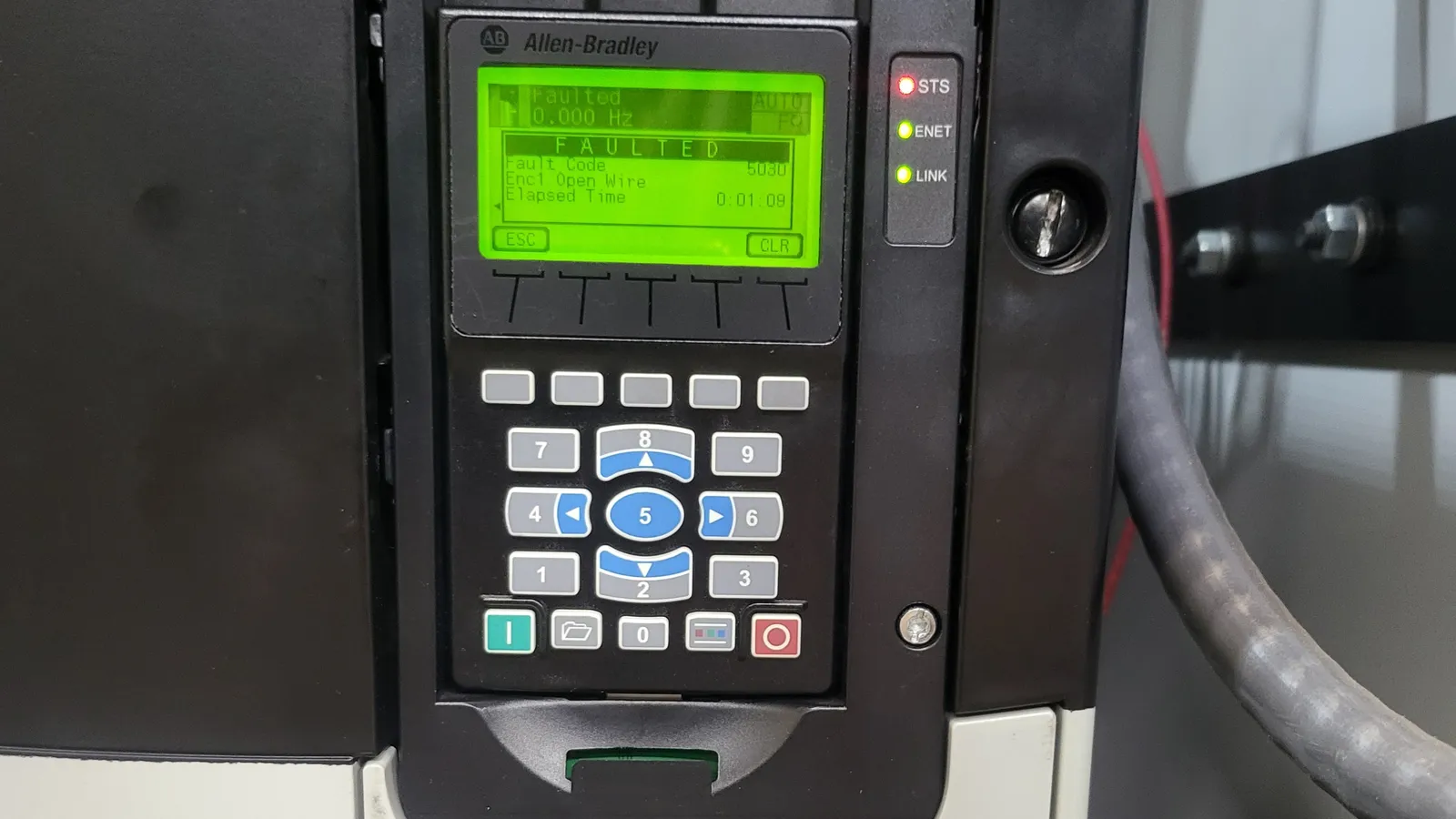

When the Motor Is Still Running but Its Insulation and Long-Term Reliability Are No Longer Guaranteed
Use preventive motor testing before hidden insulation deterioration turns into a shutdown
Motor insulation usually deteriorates gradually, not all at once.
That is why preventive maintenance and insulation testing are so valuable. A motor can still start, still run, and still carry load while the winding insulation is already losing health in the background. If nobody is checking that trend, the plant may only find out when the motor fails at the wrong time.
In industrial facilities across Toronto and the GTA, this service is especially important on motors that run continuously, motors in dirty or damp environments, motors exposed to vibration or heat, and motors that support critical process equipment. These are exactly the kinds of assets where hidden insulation deterioration can turn into expensive downtime, rushed replacement, or broader process disruption.
Fluke’s motor insulation testing guidance emphasizes baselining, data collection, and trend analysis over time. That matters because one insulation test value by itself does not tell the whole story. What really matters is whether the values are weakening, how they compare with previous readings, and whether the motor is moving toward failure or remaining stable.
You may need motor PM and insulation testing if the motor is critical to uptime, if its maintenance history is weak, if the environment is harsh, if the motor has had previous electrical trouble, or if the facility wants to move away from run-to-fail maintenance. Fluke specifically contrasts run-to-fail and preventive approaches, noting that preventive maintenance allows maintenance teams to plan downtime rather than surrendering that decision to the failure itself.
This service is also valuable when the motor appears healthy but there is uncertainty about its real condition. A megger test, insulation trend review, and where appropriate a PI-style longer-duration insulation check can provide much stronger visibility into the state of the winding system than visual inspection alone. Megger notes that PI testing involves extended test duration and is most useful when compared to earlier maintenance results.
The goal is not to create paperwork. The goal is to help decide whether the motor should remain in service confidently, be watched more closely, or be scheduled for planned intervention before a more expensive event happens.
Motor PM and insulation testing in Toronto, Mississauga, Vaughan, Markham, and across the GTA helps industrial clients protect motor reliability, improve maintenance timing, and detect winding deterioration before it becomes an operational problem.
Critical Motors Have No Condition Trend
Without insulation trend data, the plant may not know a winding problem exists until the motor fails.
Motors Run in Harsh Industrial Conditions
Heat, dust, moisture, vibration, and continuous duty can accelerate insulation deterioration over time.
Run-to-Fail Maintenance Is Still Common
Motor PM and insulation testing help shift the plant toward planned maintenance instead of reactive replacement.
Maintenance History Is Weak or Incomplete
Baselining motor insulation values creates a stronger foundation for future maintenance decisions.
One Motor Failure Would Cause Major Downtime
That kind of asset should not be left without condition-based testing and preventive review.
Motors Have Previous Electrical Trouble
Past overheating, trips, or stress are good reasons to verify insulation condition before trusting continued service.
Shutdown Windows Need Better Priorities
Testing helps decide which motors need planned action and which ones can stay in service with more confidence.
The Facility Wants Fewer Surprise Motor Failures
That is exactly where preventive motor maintenance and insulation testing provide real value.
WHY CHOOSE US
Why Industrial Clients Choose Us
We focus on practical industrial electrical solutions rather than temporary fixes, ensuring your power systems, equipment, and production infrastructure operate safely and reliably under real operating conditions. Every project is completed with careful planning, proper equipment selection, and close attention to long-term performance, system stability, and operational continuity.
Our approach eliminates unnecessary work and is based on accurate diagnostics, field-tested methods, and a clear understanding of how industrial facilities actually run, so you only invest in the work your system truly requires. We prioritize safety, efficiency, code compliance, and clean execution on every job, whether it involves troubleshooting, upgrades, installations, or power distribution improvements.
As a result, you receive a dependable, code-compliant industrial electrical system that supports your facility today, reduces the risk of costly downtime, and is properly prepared for future production demands, equipment expansion, and higher power requirements.
Licensed & Insured
All work is performed by qualified, fully insured electricians, ensuring safety, accountability, and compliance with all regulations.
ESA certified work
Every project includes permits and ESA inspection, guaranteeing that the installation meets Ontario Electrical Safety Code requirements.
Professional installations
We install panels with precise wiring, proper layout, and clear labeling, making the system safe, accessible, and easy to maintain.
Transparent pricing
You receive clear pricing based on the actual scope of work, with no hidden costs or unexpected changes during the entire project.
Fast scheduling
We schedule work efficiently and arrive on time, minimizing downtime and ensuring your electrical system is restored as quickly as possible.
Accurate calculations
We calculate electrical demand based on real usage, ensuring your panel is properly sized for both current and future electrical needs.
Code-compliant work
All installations strictly follow current electrical code requirements, ensuring safety, inspection approval, and long-term system reliability.
Reliable workmanship
Our experience allows us to deliver consistent, high-quality results that perform reliably under real operating conditions over time.
CODE & SAFETY REQUIREMENTS
Ontario Electrical Safety Code Compliance
The Ontario Electrical Safety Code (OESC) sets the minimum legal safety requirements for electrical installations and electrical work in Ontario.
ESA states that the 2024 Ontario Electrical Safety Code is the current edition and that it took effect on May 1, 2025. For motor PM and insulation testing, Code relevance is tied to safe maintenance condition, approved equipment in service, disconnecting means, live-part guarding, working clearances, and the corrective work that follows when motor defects are identified.
Preventive motor maintenance and insulation testing do not replace Code compliance. They support it by helping ensure that motors and associated equipment remain in safe working condition instead of operating until deterioration becomes failure. NFPA positions NFPA 70B as the standard for electrical equipment maintenance, and that maintenance-focused framework is directly relevant to motor PM programs.
Every motor PM and insulation testing program should be approached with safe isolation where needed, proper testing methods, approved equipment in service, and careful follow-up when weak insulation or other motor condition concerns are found. Where maintenance findings lead to repair, replacement, reconnection, or corrective work, that work should comply with the current Ontario Electrical Safety Code and ESA requirements.
Rules commonly applicable to motor PM and insulation testing
-
Rule 2-022 — Approved electrical equipment
Electrical equipment used in Ontario must be approved in accordance with Code requirements. This applies to motors and associated control and power equipment that are being maintained in service. -
Rule 2-024 — Approval requirements for electrical equipment
Equipment maintained and repaired in Ontario must be approved to recognized standards and accepted for use in Ontario. -
Rule 2-300 — General requirements for maintenance and operation
Electrical equipment must be maintained in safe working condition. This is one of the most directly relevant rules for preventive motor maintenance work. -
Rule 2-304 — Disconnecting means shall be provided
Suitable disconnecting means must be available so motors and associated equipment can be isolated safely for servicing, maintenance, and follow-up corrective work. -
Rule 2-308 — Live parts guarding
Live electrical parts must be guarded against accidental contact, especially where testing and access to motor circuits or control equipment are involved. -
Rule 2-314 — Working space around electrical equipment
Clear access around motor controllers, disconnects, MCC sections, and related equipment is essential for safe maintenance and testing. -
Rule 10-002 — Grounding and bonding requirements
Effective grounding and bonding are essential to safe motor system operation and remain relevant when motor condition is being assessed. -
Rule 14-100 — Protection of conductors by overcurrent devices
Breakers and other protective devices must protect conductors and equipment correctly, which is relevant where motor condition review overlaps with protection review. -
Rule 14-104 — Rating / coordination of overcurrent protection
Protection must be coordinated with conductor ampacity and equipment characteristics to reduce repeat motor stress and failure risk. -
Rule 28-106 — Motors and branch-circuit protection
Motor circuits must have suitable branch-circuit protection, which is directly relevant when preventive maintenance identifies motor deterioration or stress. -
Rule 28-600 — Control devices
Controllers and associated control devices must be suitable for the duty involved and installed in accordance with Code requirements for safe motor operation. -
Rule 2-004 — Notification of work / ESA inspection process
If PM findings lead to electrical repair or replacement work that requires notification, the required ESA process must be followed before the installation is returned to service.
Note: Rule selection may vary depending on motor type, voltage level, testing method, disconnect arrangement, MCC involvement, and the corrective work required after test results are reviewed. Megger and Fluke both emphasize that insulation test data is most valuable when it is trended over time rather than judged as one isolated number.
COMMON QUESTIONS
FAQ — FAQ — Motor PM and Insulation Test
1. What is motor PM and insulation testing?
It is a preventive maintenance service used to assess motor condition, especially the health of winding insulation, before failure or major downtime occurs.
2. Why is insulation testing important on industrial motors?
Because winding insulation degrades over time, and insulation testing helps reveal that trend before the motor fails unexpectedly. Fluke specifically notes that baselining and trending insulation data helps avoid unplanned downtime.
3. What does a megger test do?
It measures insulation resistance to help assess the condition of motor winding insulation and identify possible deterioration or leakage paths.
4. Is one insulation test enough to judge motor health?
Usually not. Trending is much more useful than a single reading, because maintenance decisions are stronger when current results are compared with previous values and test conditions.
5. What is PI testing?
PI, or polarization index, is a time-based insulation test that compares readings taken over a longer interval. Megger notes that PI readings are based on test duration and should be compared with earlier maintenance results.
6. Is this service only for motors that are already failing?
No. It is most valuable before failure, when the motor is still running but its electrical condition is beginning to weaken.
7. Which motors benefit most from this service?
Critical motors, continuously operated motors, motors in harsh environments, and motors where failure would cause major downtime benefit the most.
8. Can this service help avoid run-to-fail maintenance?
Yes. Fluke specifically contrasts run-to-fail with preventive maintenance and notes that a preventive approach allows maintenance managers to control downtime planning.
9. Does the service only include insulation testing?
No. The value is in combining preventive motor review with insulation data, condition assessment, and maintenance decision support.
10. Can insulation testing be useful even when the motor looks normal?
Yes. That is exactly when it is most useful, because hidden winding deterioration often develops before visible signs of failure appear.
11. Does motor PM and insulation testing replace code compliance?
No. It supports safe maintenance practice, but any repair, replacement, or corrective work still has to comply with applicable Ontario Electrical Safety Code and ESA requirements.
12. Is this service useful for building a real maintenance program?
Yes. Historical test data and motor condition tracking are exactly what help turn motor maintenance into a planned reliability program instead of a reaction after failure.
SERVICE AREAS
Serving Toronto & the Greater Toronto Area
We provide residential, commercial, and industrial electrical services across Toronto and the GTA, supporting homes, businesses, and facilities with reliable and code-compliant electrical solutions.
Our service coverage includes major cities and surrounding areas, allowing us to respond quickly and deliver consistent service across the region.
Toronto
North York
Thornhill
Richmond Hill
Vaughan
Markham
Scarborough
Etobicoke
Mississauga
Brampton
ADDITIONAL SERVICE AREAS
Hamilton
Oakville
Burlington
Milton
Georgetown
Pickering
Ajax
Whitby
Oshawa
Clarington
Aurora
Newmarket
Bradford
King City
Barrie